
The Greater and Lesser Doxology

On August 30, Covenant College had the first chapel of the 2019-2020 school year. Chapel commenced as normal with an opening time of worship, a message from Chaplain Lowe, and a closing benediction. While for many years chapel would end in a singing of the Doxology, this year the announcement was made that instead of singing the Doxology, we would be singing the Gloria Patri. 
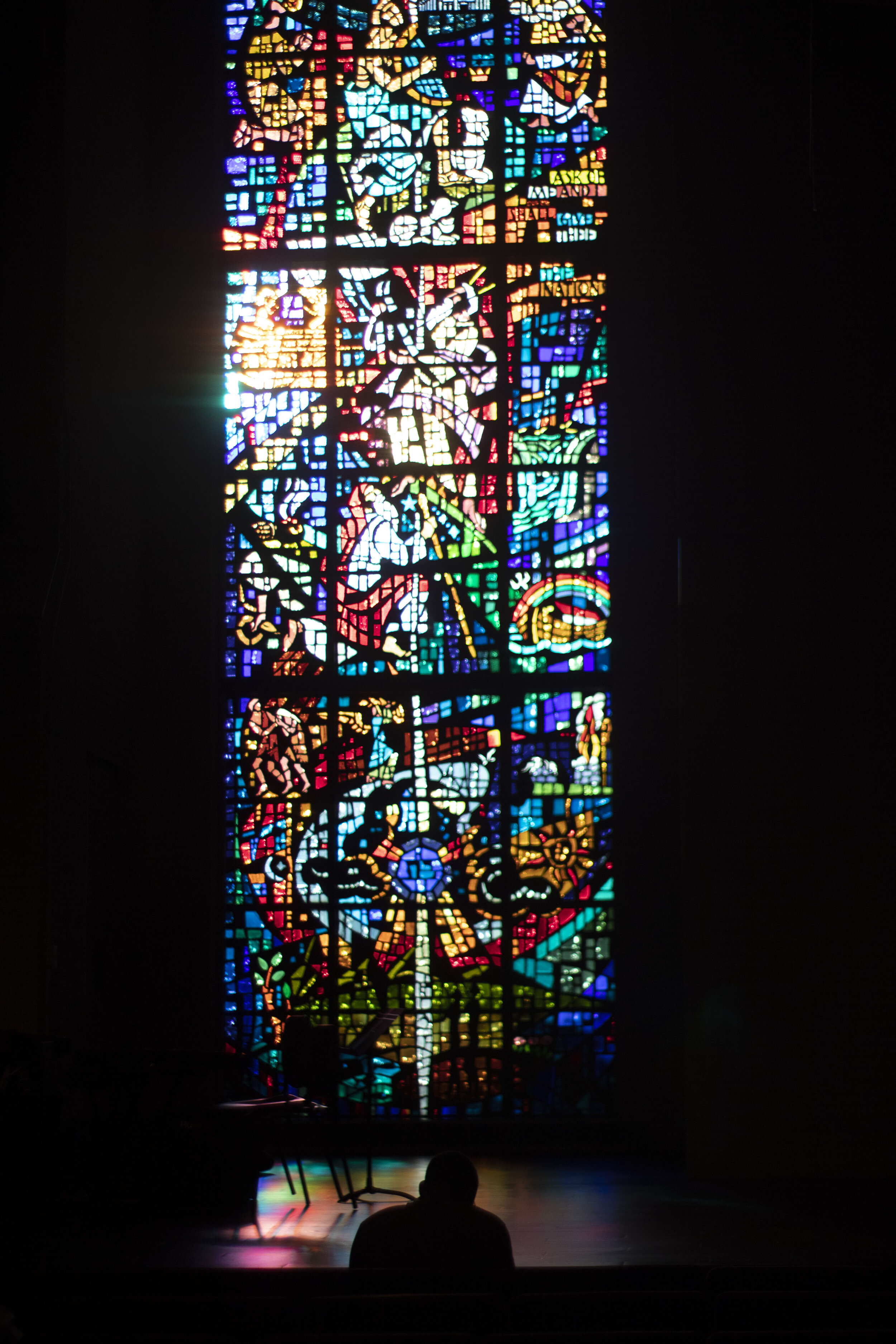
Photos by Eden Anyabwile

Photos by Eden Anyabwile

There was much confusion that spread across the Covenant community. Many students were unfamiliar with this new hymn and questioned if they would ever learn to appreciate the Gloria Patri as much as the beloved Doxology.

But what’s the big difference between the two hymns? At first glance, both hymns simply speak of giving praise and glory to the Trinity. But when you take a closer look, the Doxology speaks of all forms of creation giving praise to the Trinity, while the Gloria Patri strictly focuses on how all glory should be bestowed to the Trinity from now until eternity.

During the time of the early church, there were not many creeds that embodied the beliefs of the church. However, in response, the local churches composed creeds according to their faith and understandings. Similar to the Doxology, the Gloria Patri was used as a “cut-off” for psalms or hymns, as a sign that the liturgy was complete. While not as known as the Doxology, the Gloria Patri is also known as the “Lesser Doxology,” in order to distinguish it from the Gloria in excelsis, the “Greater Doxology.”

A modern telling of the origin of the Doxology is that it was written by the Anglican Bishop Thomas Ken. He wrote a series of hymns during his time at the Winchester College for the purpose of edifying the lives of the students. In 1695, Ken wrote a series of three hymns that the students could sing at different parts of the day. He urged the students to “be sure to sing the Morning and Evening Hymn in your chamber devoutly.” The closing of the three hymns ended in the same stanza that we are familiar with singing today. Despite a minor change made in 1709, the lyrics have remained consistent since the hymns were originally published.

In contrast, the Gloria Patri origin story is blurrier. However, there have been scholars that contribute it to Paul’s writing and his invocation of the Trinity: “The grace of the Lord Jesus Christ, the love of God, and the communion of the Holy Spirit be with all of you” (2 Corinthians 13:13). 

The mystery of the Trinity has existed since the dawn of creation. Nicholas Ayo wrote a book entitled “Gloria Patri: The History and Theology of the Lesser Doxology.” Ayo goes into extensive detail about the history of the hymn, but in short the statement, “Glory to the Father and to the Son and to the Holy Spirit as it was in the beginning, is now, and will be forever, [world without end]. Amen. Amen;” has Trinitarian baptismal formula influences, as well as Arian influences from disputes surrounding the divinity of Jesus.

These hymns seek to remind us of the mystery and majesty of God the Father, Son, and Holy Spirit. In them we are able to share in the same hymnal prayer sung by believers before us. So, while it may take some time to adjust to the new change, we can be encouraged that the change was made out of respect for our mutual faith in the Trinity. 

Photos by Eden Anyabwile

Photos by Eden Anyabwile

Chaplain Lowe said that when he was growing up, the church was not a part of his upbringing. But he remembers that once he started going to church as a young adult, he heard these hymns and felt a connection to this deeply established church history, as well to theology as a whole. He doesn’t favor one hymn over the other, but rather views both as fundamentally important to the church. His hope for the Covenant community is that we can enjoy this new shift in hymns as an extension to our faith and further understanding of the Trinity and the church as a whole.


The Best Kind of "Tryhard"

Since their 2015 Soundcloud debut, The Band CAMINO has rapidly become a staple of alt rock music and my Spotify diet. Having titled themselves “your mom’s favorite band,” their songs sport soaring guitar riffs, dark vocals, and mournful lyrics wrestling with love and personal identity. 

Following their rise to popularity, the band’s music has gradually become more produced, straying away from their old recipe of spotlighting electric guitars and melancholic melodies in favor of synthesizers and pop-music vibes. If COIN, Colony House, or The 1975 are your jam,  you’ll love them.

Their latest release is “tryhard,” their third EP (although Spotify is convinced it’s an album), which showcases their newer, more energetic sound. It’s worth noting that the band releases most of their music as singles, which creates the curious situation of four songs (well, more like three and a half) of the eight on the EP not actually being new. Likewise, they don’t tread much new ground when choosing song topics: heartbreak, poor romantic decisions, and self-doubt. The fantastic novelty and energy of “tryhard” come from more melodic bass lines, brighter vocals, faster tempos, and bouncy synth riffs.

A1.jpg

The opening track, “What I Want,” is the half-old song I mentioned earlier. Having released the original version in 2017, the band chose to tweak the intro of the song and clean up the vocals a bit. I miss the cutting harmonies and plucky guitar riff of the 2017 edition, but the updated sound fits well with the new style. 

Next up is the first new song, “Hush Hush,” in which lead vocalist Jeffrey Jordan goes over the plan for a clandestine rendezvous with a lover, repeatedly imploring, “Hush hush / Don’t give it away.” That catchy tag, the lilting but powerful electric guitar lines, and driving drums make it hard to not nod along to the beat.

“Daphne Blue” is another previously released song, but it fits perfectly with the rest of the EP. It foreshadows the band’s transition to their new style as the vocals cut from dark and rounded in the pre-chorus to the bright, belted-out first line of the chorus: “You got me off-track, got me thinkin’ abstract.” 

Switching from lost love to current relationships, “Honest” (their most recent single) begins deceptively laid-back with twinkling synths and auto-tuned background vocal tracks, giving way to punchy bass lines, wailing guitars, and unrelenting drums.

The fifth track on the EP, “See Through,” is the last to have debuted as a single. It was also my most binged song over the summer; I spent an inordinate amount of time trying to memorize the staccato, impassioned chorus (“I’ll be outside, I been cooped up / Bloodshot eyes, need a ride, will you pick up?”) on my commute. Arrangement-wise, it’s similar to “Honest,” with an emphasis on pad loops and synth choirs in the verse and more “classic” instrumentation in the chorus.

It’s hard to pick my favorite song from this EP, but the next two may be the top contenders. “Haunted” starts with a cheerful-enough synth loop and driving two-part intro, only to drop off into a musically sparse, voice-and-drums driven verse. The vocals rise to a wail for the chorus, and the song never completely lets go of that angsty energy. 

Its competition, and the next-to-last track on the album, is “Farsighted.” The band wraps this fretful, introspective tour of self-identity in a positively bouncy bass riff, chipper synths, and a generally upbeat vibe. Incidentally, the song contains a delightful description of inner monologue: “There’s a voice inside my head that I call me / Who’s a collection of conversations and melodies.”

A3.jpg

Following the trend of disguising pained lyrics in upbeat tunes, “Break Me” concludes the album by picking apart the narrator’s justifications for staying in a possibly abusive relationship. This soul-searching is set to biting synths, lively drums, and relentless guitar lines. “I hate the way you make me just / Wish I could make you hate me” is a brutal way to describe a relationship.

In a Facebook post regarding the EP’s release, the group shared, “Somewhere along the way people have called us ‘try-hards’ thinking we took ourselves too seriously or were trying to be something we weren’t. Of course, we are try-hards. The entire reason we’re here is to create something bigger than ourselves. A lot of times people use ‘try-hard’ in a derogatory sense, but we’d rather own the fact that we’ve given every ounce of ourselves to making this music.” 

The effort The Band CAMINO put into this record shows, and careful listening has only increased my initial, immediate enjoyment.

"Unplanned" Movie Review

On a typical Saturday in Abby Johnson’s Texas Planned Parenthood clinic, Johnson would normally work at her desk speaking with potential clients. However, one particular Saturday was different as Johnson was called to help with a doctor performing an abortion. The doctor tasked her with holding the ultrasound so that he could see the unborn baby as he was removing it, a.k.a. killing it.

Read more

Profile on Morty

This is how Professor Jeff Morton—just “Morty” to those who know him—teaches students how to paint: He comes into the studio on time (which is not true for several members of the class). He wears low-top hiking shoes with paint spots on them, loose fitting ashe colored carpenter’s pants that reinforce his sturdy build, a knit sweater, and a soft felt cap perched far back on his head.

Read more

Covenant College Presents: Edgar Allan Poe and Richard McElvain’s "Poe’s Midnight Dreary"

You—among many—may have chanced upon Poe’s stories and post-mortem biographies, but few take the time to truly delve into his life and loss—an existence haunted by his own creations.  This February, the Covenant College Theatre Department invites you to slip into Poe’s imagination as he mulls over his past misadventures and those of his characters on the eve of his death.  

Read more