
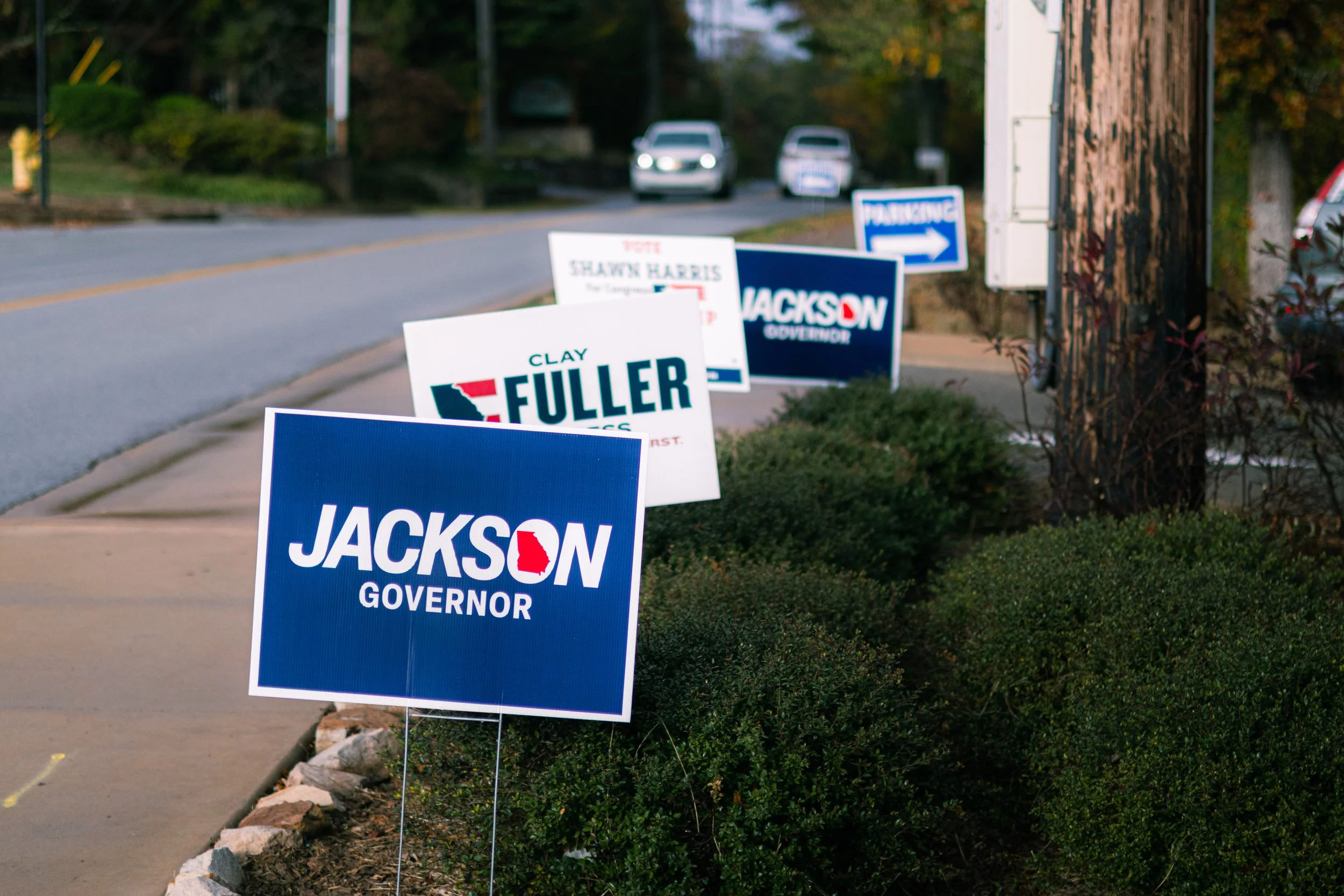
Photo courtesy of Jacob Davick
Voting for the 2026 Georgia midterms took place on Tuesday, November 3, with early voting running from October 13-30. Eligible students have the ability to vote in the county that they attend college in as dictated by the 1979 Supreme Court ruling Symm. vs United States.
The Democratic party had a sweeping statewide victory. Keisha Lance Bottoms won the gubernatorial by 54.31% and will take office in January 2027. Jon Ossoff was reelected for the U.S. Senate by 59.00% and will serve a second term.
Dr. Philip Bunn, assistant professor of political science, said in an interview: “There were a lot of predictions about the Democrats taking both the House and the Senate by at least some margin, and it’s looking like it’s way more than anyone really thought.”
According to Dean of Records and Registrar Rodney Miller, only five students registered to vote for the 2026 midterms, but this number does not reflect the number of students who have registered in the past and maintain an active status or those who chose to vote out of state.
Miller noted that presidential elections have a higher rate of registration than midterms.
An anonymous survey from November 4 revealed that 58.6% of student participants have voted in an election during their time at Covenant. 53.1% of participants did not vote in the 2026 midterms, and 57.1% of participants did not vote in the 2024 presidential election.
“Even though the number of Dade Country registration was lower this year, more students said they already have or already requested an absentee ballot than previous years,” said Miller.
Regarding student political literacy, Dr. Bunn said: “I’d say it’s better than average ... If you just poll average Americans on some pretty basic political… knowledge, most Americans are pretty low.”
In the student survey, 67.7% of participants agreed or strongly agreed with the statement: “I have a clear understanding of my voting process as a student.” 71.4% of students agreed or strongly agreed with the statement: “My vote matters and is impactful in election results.”
53.7% of students self- identified as Republican, 31.4% as unaffiliated or third party, and 14.9% as Democratic.
Bunn identified immigration as a main issue for many students going into the 2024 election, with some finding the previous administration to be too lax, while others have criticized the methods of the current administration: “Now, some of the backlash that we’re seeing, people are saying, ‘I didn’t like the way that they were enforcing immigration.’ ... And then obviously, everybody’s been kind of all tense about the Iran stuff as well because it’s materially affecting all of us.”
In light of election results, Dr. Bunn discouraged students from treating undesired outcomes as a death knell, instead looking into ways to become more civically active, like attending Lookout Mountain town halls and city council meetings.
“My encouragement is always for people not to panic one side or the other ... It’s a really good opportunity for people who are discouraged by a certain result to say, ‘OK, what can I do next time to sort of actually play a part in shaping the future?’” said Dr. Bunn.