
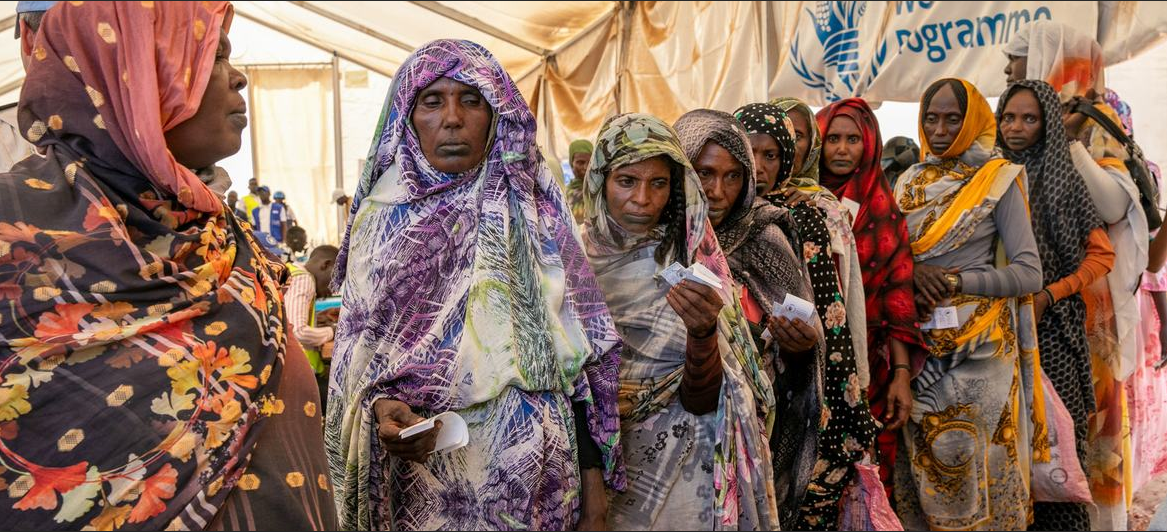
Thumbnail photo courtesy of WFP/Eulalia Berlanga via news.un.org
Covenant is an amazing community—we can live comfortably, worship freely, and be blessed to complain about class registrations instead of missile strikes. Living on a mountain as beautiful and safe as ours is a great blessing but can sometimes lead us to become a bit of a bubble, blocking out the rest of the world.
As you may—or may not—know, there are multiple high-level humanitarian crises occurring in the rest of the world. James 1:27 tells us that true religion is caring for orphans and widows in their distress. But who are these orphans and widows, and how can we help them?
In northeastern Africa, Sudan experiences ongoing civil war, which began in April 2023 when the Sudan Armed Forces (SAF) and Rapid Support Forces (RSF) mobilized to fight each other, at the cost of tens of thousands of innocent civilian lives. This conflict has led to mass displacement of over 7 million Sudanese civilians.
The displacement and the intense violence in Sudan has also led to hunger and food insecurity, with 21.2 million people facing starvation. Diseases like dengue fever and cholera are spreading like wildfire through an already decimated population. Women in particular fear for their safety as gangs rove the country and sexual violence rages. The civil war has shattered the economy, and destroyed crucial healthcare and relief services.
Similar to those suffering in Sudan, the Democratic Republic of the Congo (DRC) is experiencing mass displacements, hunger, and disease. 6.7 million DRC civilians have been forced to flee, and malaria and cholera spread through the malnourished remainders. Women in the Congo have no protection from the extreme gender-based violence occurring, and aid organizations struggle to help with record low funding and limited access due to ongoing conflict. Environmental issues also pose a threat to public health, as there are poor waste disposal systems and few sanitary places to bury the dead.
These conflicts loom so large, it can feel impossible for financially restricted, campus-bound college students to do anything with real impact. However, there are several incredibly useful ways we can help.
SPREAD AWARENESS. Even if you can’t donate or assist financially, you may know someone who can. Educate yourself and others! Letting those around you know that these things are happening keeps the problems from being buried by those who would have us forget. The more people who know, the more people can help!
Donate what you can. Local refugee or asylum organizations and aid programs can use whatever you can give, even if it’s the $4 you planned on getting Starbucks with. Global Christian Relief, International Justice Mission and Christian Aid Ministries are all doing crucial work in these countries and need all the help they can get.
Pray. Though there are Christians in all of these countries and in many more who face intense persecution, the Bible calls us to pray for all those who are persecuted. We do not serve a God who takes pleasure in the pain of nonbelievers. Pray for those who are suffering and for their leaders, that they would be comforted, and that God would use these horrific sin-fueled crises to show His face to them.
The church is called to be a voice for the voiceless, to care for the outcast as Jesus did. These are humans in need, our brothers and sisters in Christ, and the serving love of Jesus knows no bounds. We must strive to follow His example. We are so blessed at Covenant. Let us endeavor to bless the orphan and the widow as well.
“And the King will answer them, ‘Truly, I say to you, as you did it to one of the least of these my brothers, you did it to me.” –Matthew 25:40
Thumbnail photo courtesy of WFP/Eulalia Berlanga via news.un.org.