
Photo courtesy of purduexponent.org
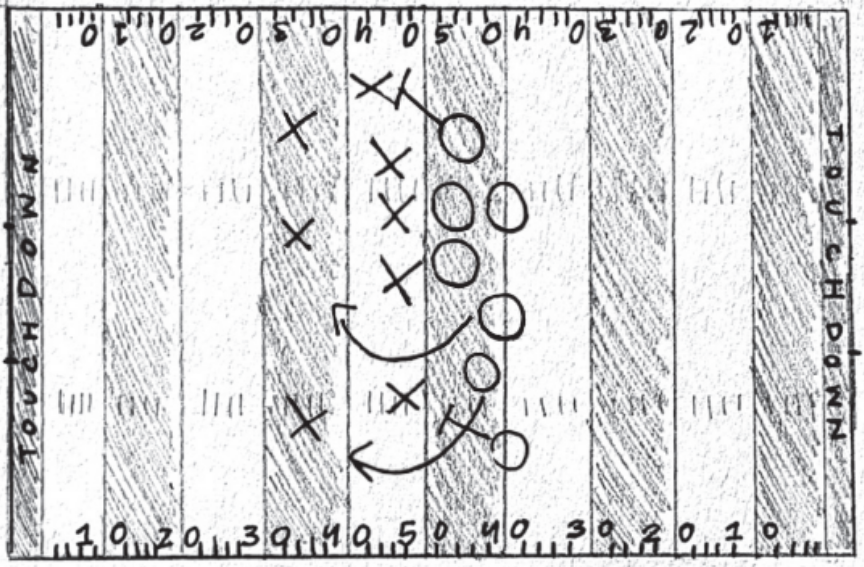
As just about all football seasons wrap up (without counting the UFL, a spring football league!), it is a fitting time to explain the rules, traditions and all things that relate to college football! First off, the sport of football originally evolved from soccer and rugby, with the object of the sport—then and now—to advance to the other side of the opponent’s field and score more points than your opponent. Advancement happens when each team has possession of the ball and is given four downs (or less technically, tries) to get 10 yards. If they succeed, they gain a first down and get four more downs until they either “give up” their possession of the ball to the other team in one of four ways: they kick it away (“punting”); they give it up when they fail to get a first down after four downs (“turning the ball over”); the offense throws to the other team or loses the ball (an “interception” or “fumble”); or the offense scores. The way that someone scores is by a touchdown (a term originating from rugby, where one places the ball on the ground to score). Worth six points, this happens when one crosses any part of the ball over the line of the end zone, the two ends of each side of a 100-yard field. After a touchdown, you can go for one point by kicking a short goal into upright posts, or two points by an untimed play at the two-yard line.
Each game starts with a kickoff, where the ball on a tee is kicked off to the other team. This determines who has possession of the ball to start the game. The way that the 11 players on offense are able to advance on the other side of the field is by running or passing the ball. Running was originally the only way to advance the ball in football until 1906, when the forward pass was legalized, albeit looking very different from how we forward pass today. The amount of creative and prolific offenses that have resulted from the opening of the field with the forward pass are staggering, alongside the smashmouth football of 300 pound bodies hitting one another on centralized running plays.
Though college football specifically has been more commercialized and “professionalized” in recent years, the core of college football is about pageantry for one’s school. Massive alumni fan bases and families that have generations of family members going to one school rally around their favorite team every fall, whether that team is constantly dominant like Ohio State, is a strong but not top tier FCS program like William & Mary, or a Division III school like Susquehanna. This sport, at the end of the day, brings family members and complete strangers, both fans of the same school, together.
Photo courtesy of purduexponent.org